Why Detroit Communities Deserve Better Access to the Outdoors
Imagine growing up in a city surrounded by concrete. The nearest park is miles away. Getting there means a car you don't have, gear you can't afford, and a trail that was never designed with your needs in mind.
Many Detroit residents know exactly what that feels like.
Detroit has over 630,000 residents. It is also a city where only about 6% of land is used for parks and recreation. That’s less than half the national median of 15%. Plus, a 2025 geospatial study found that 87% of buildings in Detroit lack a park or recreational area within a quarter-mile walking distance. And, unfortunately, the neighborhoods hit hardest are not random.
The same research found that higher social and environmental vulnerability, including low income, language barriers, and proximity to pollution, directly correlates with less green space access.
That is a pattern with a long history behind it. And it does not stop at Detroit's city limits.
A Pattern Rooted in Policy
Across the United States, access to nature has never been equally distributed. Although people of color make up nearly 40% of the population, almost 70% of visitors to national forests, wildlife refuges, and national parks are white, with Black Americans the most underrepresented of all. That gap does not happen by accident. Income and race are the two strongest predictors of whether a person grows up with parks, trails, and green space nearby. And in Detroit, you can trace exactly how that happened.
Decades of redlining shaped which Detroit neighborhoods received investment and which did not. A study published in the Journal of Exposure Science found that historically redlined neighborhoods in Detroit face significantly higher environmental hazards today. That’s a direct legacy of policies designed to separate communities by race. The lack of nearby green space in those same neighborhoods is part of the same story.
The barriers look different depending on who you are:
For low-income families, it’s the cost of gear, lack of transportation, and the outdoor spaces that assume you have both.
For BIPOC communities, it's a history of removal, exclusion, and displacement from public lands, a lack of representation on the trail, and real safety concerns that do not disappear at the trailhead.
For people with disabilities, it’s trails that were built for able-bodied individuals, no adaptive equipment available, and almost no information written with their needs in mind.
For LGBTQ+ individuals, it’s the quiet anxiety of not knowing whether a space will feel welcoming and safe or not.
For immigrant communities, it’s unfamiliarity with public lands, language barriers on signage, and safety concerns that make a simple walk feel complicated.
For communities already carrying the chronic stress of economic pressure, discrimination, and systemic exclusion, that weight compounds daily. Research shows that just two hours in nature per week measurably lowers cortisol levels, reduces symptoms of anxiety and depression, and improves overall wellbeing. The restorative effects are strongest for people under the greatest strain.
A walk through a quiet trail does not fix what these individuals are up against. But for many, it is one of the few places where the noise of surviving quiets down long enough to breathe.
Detroit has the land. The Crux Foundation is here to make sure more residents can actually use it.
Why We're Here
The Crux Foundation is a Detroit-based nonprofit built for every community that has been left out of the outdoor conversation. BIPOC families. People with disabilities. LGBTQ+ individuals. Low-income households. Immigrants and newcomers to our city.
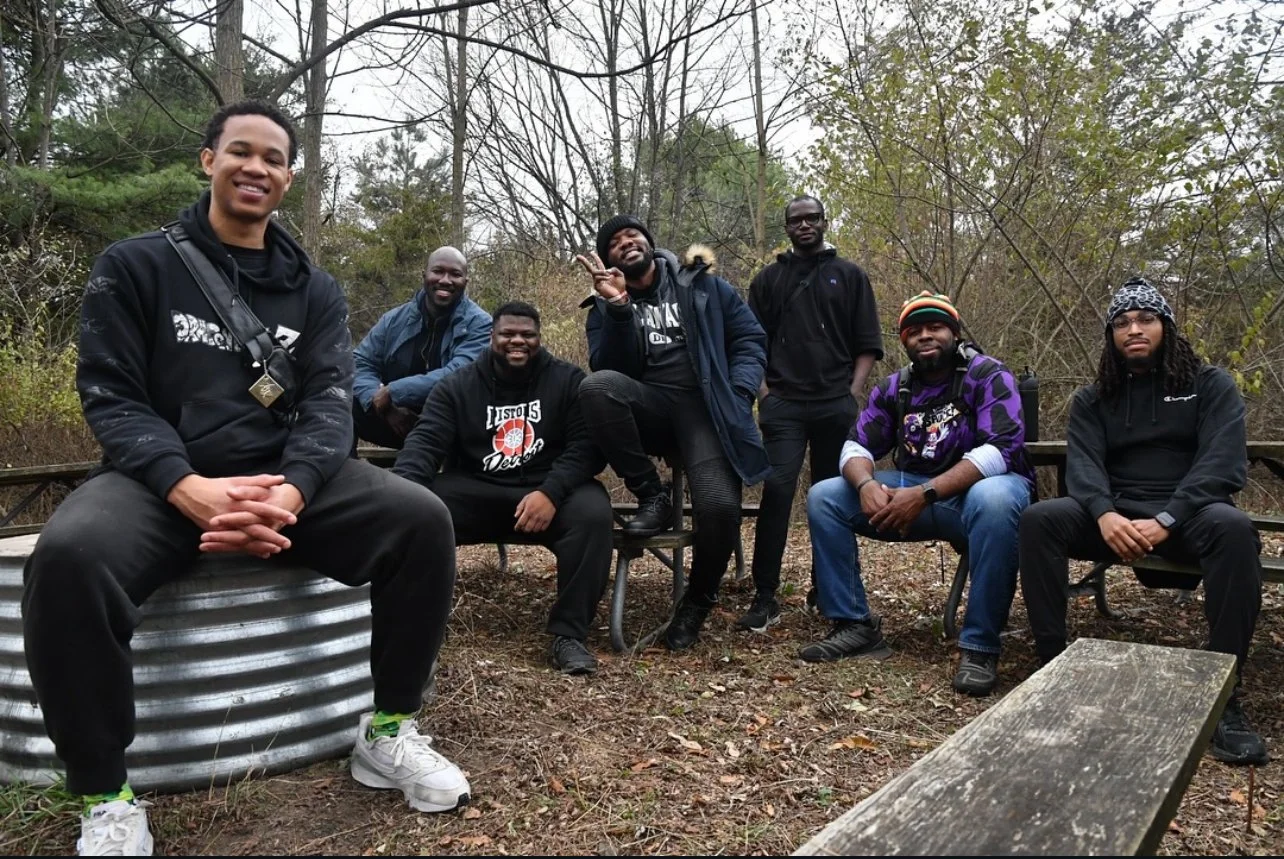
The Crux Foundation’s first 2025 Odogwu hike
Our mission is to go beyond just pointing you toward the outdoors by making sure you can actually get there. We are early in that work. But every person that we connect to the outdoors moves us closer to the organization we are working to become. This is what we are building toward:
Equipment: Access to the gear you need. Cost should never be the reason a family stays home.
Resources: Practical, honest guides built around the real barriers Detroit residents face.
Education: The skills, safety knowledge, and confidence to feel prepared before you ever hit a trail.
Community: Group outings, events, and a growing network of people who show up together. The first time outside is a lot easier when you are not doing it alone.
Access: Just getting to nature is a barrier for a large portion of our community. We work to connect Detroit residents to green spaces that are close, reachable, and accessible.
This city deserves to breathe. We are building something to make sure it can.
We'd love for you to be part of it. Follow our work on Instagram at @cruxfoundation to stay up to date or donate to our mission.